
Since Tomorrows Schools of the 80s we have relied on distant experts and, worse still, politicians to determine what goes on in our classrooms.We seem to have lost more than we have gained. And most of all we have lost the insight of creative teachers past and present. And no one trusts Ministry experts.
As I was gathering material to write an article ( on the importance of the arts) it brought to my attention the importance of creative individual in any areas of human endeavour.
And as well, by gathering up resource material, it also made me reflect on the creative process - a very messy one indeed. Not a process liked by the technocrats who like to define and measure predetermined progress.
The creative process begins with some kind of vision of the finished product but whatever eventuates might, or might not, resemble the original vision. This is the essence of creativity -being open to opportunities as they arise but aways keeping the end( more or less) in mind.
And it is this creativity that we need if we are to thrive In the future.
Currently we are heading in the wrong direction with the imposition of standardisation, the current surveillance culture, and an obsessive testing of what can be tested. Most schools are in an educational no mans land unsure in what direction they should take. In such confusing and ambiguous times it is time for mavericks to be valued. Or rather for mavericks to do what they do best!
Does your school benefit from the talents and energy of the 'maverick' or does it seek to restrain them?. The following is based on material written by Pat Heenan of the Centre for Leadership Excellence , Education Queensland 2000 that I found in my search for my article on the importance of the arts .
New Zealand was settled by courageous creative Polynesian and European adventurers prepared to risk all for success in an unknown world. Not for then complying to bureaucrats sitting at their desks or self interested populist politicians.
It was anthropologist Margaret Mead who said that every new idea was started by a small group of committed people. Or as Ralph Waldo Emerson wrote, 'Every reform was once a private opinion.'
Look around your school. Who are the teachers doing great stuff that seems different from what is expected?
They may be doing great things but they may not get on so well with their more conformist colleagues and team leaders. Such people may be genuine mavericks able to make a greater contribution if treated differently.
It was pioneer creative teacher Sylvia Ashton Warner who was believed to have said , 'you can tell the creative teacher he , or she, is the one lying dead in the corridor with an arrow in their back fired by one of their fellow teachers'.
Maybe the problem is with the team culture that has become so dominant in schools these days?
It does seem that the intent of such a team culture is for every staff member to be fashioned into 'good' team player leaving little room for individuality. As some schools say 'there is no I in team'. Under such conditions mavericks are forced to conform and the benefits of their thinking ignored. And to make things worse such mavericks can become subversive.
Patriarchal, or matriarchal, leadership combined with oppressive teamwork ( backed up endless testing) are powerful combinations. All very well if all involved have helped construct, or have bought into, the vision and values of the schools - values that ought to value individuality and creativity.
In such top down environments it is all but impossible for teachers to be really creative. Everything is based on improving the status quo.
As we enter what some are calling a 'Second Renaissance' , or 'Age of Ideas' such a conformist environment is counter-productive. The past will no longer prepare us for an unpredictable future. It seems schools really dislike change - or learning - forgetting that real learning, or change, is aways at first disruptive.
It seems we are frightened to take big steps even while we know things simply not working and current remedies simply compound the problem - National Standards come to mind.
We need schools to take a creative stance and to value new ideas, ideas that come from any source.As ideas emerge trying things out and then keeping what works. Tapping into creative individuals are the key.
The challenge is for school leadership, and for team structures, to work with the way mavericks think. A kind of liberation leadership; a concept that applies to team leaders and teachers alike.
Liberation leaders need to identify the people who can challenge the status quo and who are able to devise original and creative solutions. Such leadership can liberate such people to do their best work and for such people to still be accountable within the agreed beliefs of the school. Mavericks will work with leaders they respect and within values they believe in.
Unfortunately most organisations find it hard to absorb the ideas of mavericks.
Here are a few ideas to help:
Stop excessive team building ( which can morph into group think) and put the 'I' back into team. Teams work best with different points of view.
Start tapping into the exciting the idea of mavericks and stop forcing them to conform. Let them know they are a way ahead of their time!
Stop creating conditions that stifle maverick's creativity and start developing an environment that nurtures mavericks and stimulates creativity.
Don't give the maverick too much freedom - encourage them to work within agreed boundaries however how liberal. Integrate their successful ideas into the school.
Protect your mavericks - let then know they are special. Reward them with more freedom. Start appointing/promoting people who demonstrate the characteristics of the maverick.
This is not an argument against teams - creative teamwork is vital. Nor is it an argument for rampant individualism. There is a need to fuse creative , often difficult, individuals with team requirements. It will always be a creative balancing act. Now and then individual will know better than teams! So don't overdo teams.
Stuffing mavericks into boxes will never work. It will stunt their creativity, develop them as potential wreckers, and schools will suffer for lack of their innovative ideas.
It is all a bit of a paradox.Capturing the talent, imagination,spirit and vitality of mavericks while at the same time still maximising the benefits of team building.
Leadership is the ultimate form of creativity at any level.
Mavericks - our only hope!

A lesson around Waitangi Day.
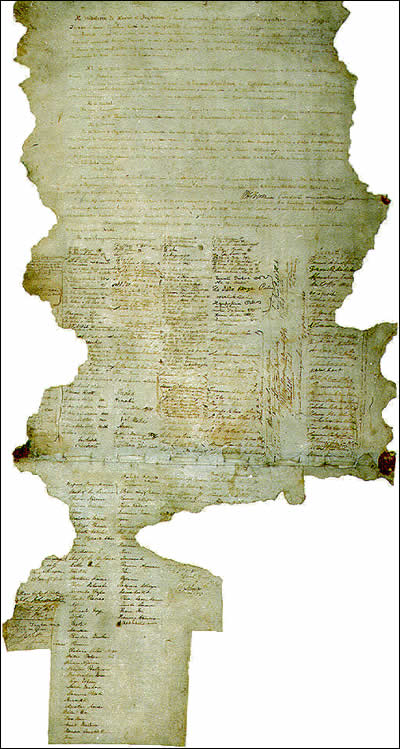
A wise teacher should take advantage of important events in New Zealand history such as the signing of the Treaty of Waitangi.
As the celebration comes early in the year it is a good opportunity to introduce the students to how they will be expected to learn in the class; how to work together to develop critical thinking; how to value their own ideas; how to deepen their understandings and how to apply lessons learnt to their own class.
The message teachers need to give is that in all learning students need to follow up their own questions, to learn how to make use of whatever resources are available and, as a result of their efforts, to gain a deeper understanding.
Such a study could begin before the day and conclude the days following.
The first thing is to ask the students what important New Zealand event is happening over the weekend? Some students will be aware of the Treaty.
When the Treaty is in their minds the next thing is to ask them what they know about the Treaty.
This can be done individually, in small groups ( that could report their combined ideas back to the class) or done as a whole class discussion (with the teacher writing up their thoughts).
From such activities the teacher can then help the class write up all their 'prior' knowledge , misunderstandings included. Older students could write out their own 'prior' ideas - when such ideas are read by the teacher the range of understandings will be apparent.
At this stage teachers need to introduce some resource material for the students to study - most schools have facsimile copies of the Treaty to display and there is a range of pictorial and written resources that can be studied as part of the literacy programme as guided reading. A map of Northland would valuable to introduce focusing on the Bay of Islands. A chronological time line of events might be drawn up to clarify the happening before and during the signing. This is the time for some old fashioned teaching about the facts about the Treaty.
During the afternoon inquiry time the information gained from resources available can be used for students to answer key questions. Early in the year it is possibly best for teachers to help students define a small range of 'thinking' questions. Question should encourage comparisons and ask for students' opinions and feelings and not just be copied out as is often the case. It is a good idea to encourage students to list the resources they have made use of.
A range of outcomes could be negotiated with and developed by the students.
The teacher might take the opportunity for the class to develop a set of class rules and this could be written out on a suitable piece of paper to look like the original Treaty.
Students could study some of the main characters in and observers to the signing of the Treaty and write accounts from different peoples' perspectives - how such people might be feeling about the Treaty. Students would need to call on the knowledge gained during literacy time.
Junior teachers could write a 'big book' by scribing students thoughts about the Treaty.
Older students could complete a study chart, or booklet, following guidelines from the teacher.
The whole scene of signing the Treaty could be acted out with students dressed in suitable clothing ( which will involve considerable research). Students could compose some thought poems about the happenings of the day. Perhaps they could compose diary entry for the day -as no doubt people would have done ( those who could write that is).
Each student could choose an element of the signing that appeals to draw and later enlarge to paint or crayon. Once again this requires visual research and assistance from teachers to ensure the painting has some dramatic focus. In such times artists would have recorded the events by drawing - students could consider how such event would be recorded today.
To conclude the study parents might be invited to look at the work at the end of a school day or students ideas gained written out and sent home.
At the very least students could copy into their study books their prior thoughts and what they now know with suitable illustrations.
An event such as the signing of the Treaty provides an opportunity to bring history alive for the students as well as introducing ideas about how they will be expected to learn in the class
Learning: from 'novice' to 'expert' from John Edwards

This is one of the key slides from John Edward's keynote presentation to the 1400 educators who attended the recent Inspired Impact Conference held in Palmerston North.
For principals, teachers, and their students who are beginning a new year, this particular slide has an important message -a message for anyone helping another person to learn anything.
The white horizontal line at the bottom shows the growth of a learner from 'novice', to 'beginner', to 'competent', 'proficient' and finally 'expert'.
The vertical line at left shows the appropriate basis for the level of help ( rule governed behaviour).
When anyone undertakes new learning ( including first appointment as a principal or teacher)one starts in the 'novice' position. At this point individuals need to know clearly what is expected of them and how to go about it.
As learning progresses the need for rule governed behaviour decreases as shown by the rising orange line. When the 'expert' position is realised then people are able to use their experience ( having internalised rule governed behavior). Such 'experts' are able to 'read' the context and make decisions intuitively. If I remember they have reached a personal professional knowledge (PPK).
The vital transition is from 'competent' to 'proficient' leading to becoming an 'expert'.
At this point the helper needs to pull back from providing explicit 'rule governed behaviour' otherwise people get stuck at the competence level.
This idea of 'puling back' is in line with the concept of 'scaffolding' where, as learners become effective, the 'scaffolding' is removed. If this is not done the learner becomes forever controlled by the rule governed behaviour. As learners, including teachers, develop 'competence' they need to be thrown on their own resources and encouraged to use their creativity, imagination, and intuition. For example insisting that expert teachers need to provide detailed lesson plans actually decreases such teachers effectiveness. In classes over use of teacher assistance leads to all students work looking the same.
As one old principal once told me it is possible to help people to death - others call it 'learned helplessness'. This,I believe, occurs all too frequently in our current surveillance culture and over planned classrooms. We need to give all learners space to be creative.
The time required to progress from 'novice' to 'expert' will depend on the situation and what is to be learnt.
The progression from a novice to an expert performer in such a complex situation as teaching some say is a 'journey of a thousand days'. Others have written it requires 10000 hours. We need to think, depending on the entry ability of the individual, of a three year progression to become an 'expert' teacher.
In a class the 'journey' will take from term one to four for most students and, in my experience, well over six terms for some. This is one reason why I favour 'family' or mixed aged classes.
For a classroom teacher it means not to be frightened to provide students with all the help they need at the beginning of the year ( or any learning experience) but to keep in mind that the vision ought to be to develop 'confident independent life long learners' equipped with skills and attitudes ( 'key competencies') to become 'seekers, users and creators of their own knowledge'.
The artistry of the teacher is to judge when to assist and when to trust the learner to strike out on their own.
This liberation of the learner is the real challenge of a creative teacher. Unfortunately too many teachers( and learners) never progress beyond the competence level.
Thanks John for sharing the model. Good advice.
Beginning teaching - or starting a new year

Robert Fried is worth reading. Another of his books is called the 'Passionate Teacher'. In his book the 'Game of School' he writes about how students learn to play the game of school to get along. I remember one of his anecdotes was about a grade one student coming home and being asked by his anxious mother what he had learnt during the day? He told his mum he learnt that their were two kind of kids. Good ones who did as the teacher asked of them and bad kids who didn't. Conformists and non conformists. Kids learn quick.
Fried's book outlines several groups of students from those who work to please the teacher, those who work because they love learning , and others who get their satisfaction by confronting teachers, and those who try to remain invisible.
Beginning teachers face a dilemma.
It is obviously sensible to 'find out what is important around here' and to get on with doing it.
Good advice to start with but the danger is that it is all too easy to conform unthinkingly to bad habits as well.Compliance and conformity to school expectations ( for better or worse) is more the name of the game for new teachers.
For example there is a lot of talk about the importance of inquiry and creative learning - about integrating subject disciplines around relevant problems. However when school timetables are passed out it becomes pretty obvious schools are centred around two traditional areas - literacy and numeracy.
In fact it is hard to see where inquiry and creativity actually fit in.
The only solution, if you are a new teacher, is to do your best to develop literacy and numeracy skills that will be used to ensure deep and meaningful inquiry studies. Students should see inquiry learning as the most important thing.. They should see literacy and numeracy as a means to an end -as vital 'foundation skills'. They need to see the difference between 'real' maths and 'practice' maths.
This is easiest in literacy ( I prefer the heading 'language arts') by basing comprehension and information research skills on the current inquiry topic but most inquiry topics also need mathematical skills to be in place. And it is important for students to see the connections as well.
One task I would do is to get the class to complete an informal survey of attitudes, or feelings, towards all aspects of the school curriculum. Ask students to show their interest using a one to five scale or sad or smiley faces.
Developing a love of learning and developing a 'feeling for' each area is vital. If the results are less than wonderful then you will know where to place your effort as teacher.
It strikes me teachers spend hours each week on mathematics for little effect. At the end of schooling far too many students leave with a poor attitude ( and achievement level) in maths and this ought not to be the case. If you placed poetry on the list I bet not many students would say they liked it but I also bet that, with interesting teaching, all students would come to see poetry as a fun activity.
So what do your students think of various school subjects? The survey is a good first day activity. Better still if the list were drawn up by all teachers and used as an important assessment tool.
If you know about the mindset research of Carol Dweck add :
1 Do you think were are born as smart as you are ever going to be ( 'brains' or sports ability) and there are some things you just can't do ?
Or
2 Do you think you can get better at anything if you try hard and practice?
The first is a 'fixed mindset'.Low ability students get their lack of ability affirmed at school ( through ability grouping, national testing or streaming) and high achievers ( often girls) do not risk their status by new areas of learning becoming risk averse. Those with a 'growth mindset' just have a go at anything believing in effort and focused practice and see not succeeding as a challenge.This 'growth mindset' underpins the New Zealand Curriculum; ' have a go kids'
Click on the links below for some good advice to read before starting the school year.
Great expectations -advice for beginning teachers
Starting the school year..Lots of practical activities to choose from
If you want some practical ideas to start the year check out action plans and lessons.
Make this the year to break out of traditional patterns and assumption and to develop active literacy, mathematics and inquiry programmes - ones that value students' 'voice' , questions, ideas and creativity.
There is no rush but don't be trapped by yesterdays timetables and expectations.
Remember the revised New Zealand Curriculum has as its vision for all students to be 'confident life long learners' ( or inquirers) and for them to have the competencies, or 'habits of mind', or 'learning power', to be 'seekers, users,and creators of their own knowledge'.
Few schools have achieved such a vision - yet! Or if they have the vision they have a reality gap between what is said and done!
Beginning teaching - or starting a new year
Robert Fried is worth reading. Another of his books is called the 'Passionate Teacher'. In his book the 'Game of School' he writes about how students learn to play the game of school to get along. I remember one of his anecdotes was about a grade one student coming home and being asked by his anxious mother what he had learnt during the day? He told his mum he learnt that their were two kind of kids. Good ones who did as the teacher asked of them and bad kids who didn't. Conformists and non conformists. Kids learn quick.
Fried's book outlines several groups of students from those who work to please the teacher, those who work because they love learning , and others who get their satisfaction by confronting teachers, and those who try to remain invisible.
Beginning teachers face a dilemma.
It is obviously sensible to 'find out what is important around here' and to get on with doing it.
Good advice to start with but the danger is that it is all too easy to conform unthinkingly to bad habits as well.Compliance and conformity to school expectations ( for better or worse) is more the name of the game for new teachers.
For example there is a lot of talk about the importance of inquiry and creative learning - about integrating subject disciplines around relevant problems. However when school timetables are passed out it becomes pretty obvious schools are centred around two traditional areas - literacy and numeracy.
In fact it is hard to see where inquiry and creativity actually fit in.
The only solution, if you are a new teacher, is to do your best to develop literacy and numeracy skills that will be used to ensure deep and meaningful inquiry studies. Students should see inquiry learning as the most important thing.. They should see literacy and numeracy as a means to an end -as vital 'foundation skills'. They need to see the difference between 'real' maths and 'practice' maths.
This is easiest in literacy ( I prefer the heading 'language arts') by basing comprehension and information research skills on the current inquiry topic but most inquiry topics also need mathematical skills to be in place. And it is important for students to see the connections as well.
One task I would do is to get the class to complete an informal survey of attitudes, or feelings, towards all aspects of the school curriculum. Ask students to show their interest using a one to five scale or sad or smiley faces.
Developing a love of learning and developing a 'feeling for' each area is vital. If the results are less than wonderful then you will know where to place your effort as teacher.
It strikes me teachers spend hours each week on mathematics for little effect. At the end of schooling far too many students leave with a poor attitude ( and achievement level) in maths and this ought not to be the case. If you placed poetry on the list I bet not many students would say they liked it but I also bet that, with interesting teaching, all students would come to see poetry as a fun activity.
So what do your students think of various school subjects? The survey is a good first day activity. Better still if the list were drawn up by all teachers and used as an important assessment tool.
If you know about the mindset research of Carol Dweck add :
1 Do you think were are born as smart as you are ever going to be ( 'brains' or sports ability) and there are some things you just can't do ?
Or
2 Do you think you can get better at anything if you try hard and practice?
The first is a 'fixed mindset'.Low ability students get their lack of ability affirmed at school ( through ability grouping, national testing or streaming) and high achievers ( often girls) do not risk their status by new areas of learning becoming risk averse. Those with a 'growth mindset' just have a go at anything believing in effort and focused practice and see not succeeding as a challenge.This 'growth mindset' underpins the New Zealand Curriculum; ' have a go kids'
Click on the links below for some good advice to read before starting the school year.
Great expectations -advice for beginning teachers
Starting the school year..Lots of practical activities to choose from
If you want some practical ideas to start the year check out action plans and lessons.
Make this the year to break out of traditional patterns and assumption and to develop active literacy, mathematics and inquiry programmes - ones that value students' 'voice' , questions, ideas and creativity.
There is no rush but don't be trapped by yesterdays timetables and expectations.
Remember the revised New Zealand Curriculum has as its vision for all students to be 'confident life long learners' ( or inquirers) and for them to have the competencies, or 'habits of mind', or 'learning power', to be 'seekers, users,and creators of their own knowledge'.
Few schools have achieved such a vision - yet! Or if they have the vision they have a reality gap between what is said and done!
Beginning teaching - or starting a new year
Robert Fried is worth reading. Another of his books is called the 'Passionate Teacher'. In his book the 'Game of School' he writes about how students learn to play the game of school to get along. I remember one of his anecdotes was about a grade one student coming home and being asked by his anxious mother what he had learnt during the day? He told his mum he learnt that their were two kind of kids. Good ones who did as the teacher asked of them and bad kids who didn't. Conformists and non conformists. Kids learn quick.
Fried's book outlines several groups of students from those who work to please the teacher, those who work because they love learning , and others who get their satisfaction by confronting teachers, and those who try to remain invisible.
Beginning teachers face a dilemma.
It is obviously sensible to 'find out what is important around here' and to get on with doing it.
Good advice to start with but the danger is that it is all too easy to conform unthinkingly to bad habits as well.Compliance and conformity to school expectations ( for better or worse) is more the name of the game for new teachers.
For example there is a lot of talk about the importance of inquiry and creative learning - about integrating subject disciplines around relevant problems. However when school timetables are passed out it becomes pretty obvious schools are centred around two traditional areas - literacy and numeracy.
In fact it is hard to see where inquiry and creativity actually fit in.
The only solution, if you are a new teacher, is to do your best to develop literacy and numeracy skills that will be used to ensure deep and meaningful inquiry studies. Students should see inquiry learning as the most important thing.. They should see literacy and numeracy as a means to an end -as vital 'foundation skills'. They need to see the difference between 'real' maths and 'practice' maths.
This is easiest in literacy ( I prefer the heading 'language arts') by basing comprehension and information research skills on the current inquiry topic but most inquiry topics also need mathematical skills to be in place. And it is important for students to see the connections as well.
One task I would do is to get the class to complete an informal survey of attitudes, or feelings, towards all aspects of the school curriculum. Ask students to show their interest using a one to five scale or sad or smiley faces.
Developing a love of learning and developing a 'feeling for' each area is vital. If the results are less than wonderful then you will know where to place your effort as teacher.
It strikes me teachers spend hours each week on mathematics for little effect. At the end of schooling far too many students leave with a poor attitude ( and achievement level) in maths and this ought not to be the case. If you placed poetry on the list I bet not many students would say they liked it but I also bet that, with interesting teaching, all students would come to see poetry as a fun activity.
So what do your students think of various school subjects? The survey is a good first day activity. Better still if the list were drawn up by all teachers and used as an important assessment tool.
If you know about the mindset research of Carol Dweck add :
1 Do you think were are born as smart as you are ever going to be ( 'brains' or sports ability) and there are some things you just can't do ?
Or
2 Do you think you can get better at anything if you try hard and practice?
The first is a 'fixed mindset'.Low ability students get their lack of ability affirmed at school ( through ability grouping, national testing or streaming) and high achievers ( often girls) do not risk their status by new areas of learning becoming risk averse. Those with a 'growth mindset' just have a go at anything believing in effort and focused practice and see not succeeding as a challenge.This 'growth mindset' underpins the New Zealand Curriculum; ' have a go kids'
Click on the links below for some good advice to read before starting the school year.
Great expectations -advice for beginning teachers
Starting the school year..Lots of practical activities to choose from
If you want some practical ideas to start the year check out action plans and lessons.
Make this the year to break out of traditional patterns and assumption and to develop active literacy, mathematics and inquiry programmes - ones that value students' 'voice' , questions, ideas and creativity.
There is no rush but don't be trapped by yesterdays timetables and expectations.
Remember the revised New Zealand Curriculum has as its vision for all students to be 'confident life long learners' ( or inquirers) and for them to have the competencies, or 'habits of mind', or 'learning power', to be 'seekers, users,and creators of their own knowledge'.
Few schools have achieved such a vision - yet! Or if they have the vision they have a reality gap between what is said and done!
Something old but still worth thinking about! And read John Edward's poem as well

Late in January there is going to be a major conference - 'The Inspired Impact Conference; Developing the whole child'. It is about challenging traditional curriculum delivery methods to prepare a place for creativity in classrooms. The conference has at its aim 'to delve deeply into learning and creativity'.
All I can say it is about time.
Creativity has been at risk the past decades as literacy and numeracy imperatives have all but eaten up all the school day. And with the National Standards it can only get worse. There is more compliance and formulaic 'best practice' conformity in our schools than creativity. All too often when you visit classrooms you see clone like art work.
Teachers need to have the courage to ensure all children develop all their talents and become the 'confident life long learners' ( or inquirers) that the 2007 New Zealand Curriculum asks of them. All children have the right to be 'seekers, users and creators of the own knowledge'.
Red flower
Once upon a time there was a little boy who studied at a big school.
One morning the teacher said "Today we�re going to draw."
"Good" thought the little boy.
He liked to draw lions, tigers, chickens, trains and boats.
He got his color-pencils and started drawing.
"Wait!! Don�t start yet." said the teacher.
She waited until all the students were ready and then said ...
"We�re going to draw flowers."
The little boy started drawing beautiful flowers with his pink, orange and blue pencils.
"Wait" said the teacher. "I�ll show you how to do it."
And the flower she drew was red with a green stem.
"Ok" said the teacher "now you can do it."
The little boy looked at the flower the teacher had drawn , looked at his own flowers and liked his best. He couldn't say that so he turned the sheet of paper over and drew a flower just like the one the teacher had drawn - red with a green stem.
Another day the students were having class outside and the teacher said ...
"Today we are going to play with clay."
"Great" the boy thought.
He liked to play with clay.
He could make things like elephants, mice, cars and trucks.
He started to take some clay in his hands and make a big ball.
Then the teacher said ... "Wait ! Don�t start yet."
She waited until all the students were ready.
"Now" she said "we�re going to make a plate."
"Good" thought the little boy.
He liked to make plates of different sizes and shapes.
The teacher said ... "Wait !! I�ll show you how to do it."
It was a soup-plate.
"Ok" she said "now you can start."
The little boy looked at the plate the teacher had made, looked at his own plate and liked his best. He couldn�t say it so he got his plate, made it into a big ball and started it again.
He made a soup-plate just like the one the teacher had made.
And since early in his life he learned not to do things by himself but to wait for a model.
And then the little boy went to another school.
This one was even bigger than the other one.
One day the new teacher said ... "Today we�re going to draw."
"Good" thought the little boy.
He waited to see what the teacher would draw.
The teacher didn�t draw anything.
She only walked around the room.
Then the teacher approached the little boy and asked "Don�t you like to draw?"
"Yes" he said "but what are we going to draw?"
"I don�t know" said the teacher "draw whatever you want."
"How can I do it?" he asked.
"Any way you want." said the teacher.
"But what colors should I use?" he asked.
"You choose. If everybody makes the same drawing with the same colors how can I know which drawing is yours?" she said.
"I don�t know" answered the boy.
And he draw a red flower with a green stem.
Many times we want our children, friends, relatives, people we love, to do things the way we believe is the correct one.
Are we right?
Other times we sit and wait until someone tells us what to do.
Is that right?
If you have time read the poem, 'What did you steal from your children today?' written by John Edwards one of the Inspired Impact Keynote speakers.
The future lies with creative teachers!


The above photos were sent to me by a very creative teacher and are the result of on tern work with a year 3/4 class.
I am more convinced than ever that real educational progress depends almost entirely on tapping the originality and innovative thinking of such teachers.
Not curriculums developed by distant experts - they need to be kept as simple frameworks for teachers to work within.
Not principals - their job is to create the conditions to encourage 'their' teachers to take learning risks and try things out within agreed frameworks . Not all this ridiculous testing and accounting for 'achievement' - measuring never made the pig fatter . And not phonics.
Not college of education advisers - they are simply educational mercenaries passing on contracted 'best practices' they never used themselves.
Certainly not Ministry technocrats - who dance to the tune of whoever pays the piper and certainly not Education Review Office bureaucrats - whose careers have been one of toeing the line and saying yes to those in power. Not the Minister - who can only sing ( badly) one limited song.The Ministries role is to create the conditions to realise the energy of principals and teacher leaders and, in turn, the gifts and talents of all students
But finally only creative teachers make real changes! And there are so few. Thanks Deborah - rooms like yours cheer me up no end and give me a glimmer of hope.
Re -integrating language teaching with reality

In an inquiry based classroom every aspect of language teaching could well relate to the current study - reading to develop understanding, writing thoughts , descriptions and theories, and lots of oral language, drama , poetry. This was once the case in many schools until literacy become so dominant and largely divorced from the rest of the curriculum.
The need to express ideas is an evolutionary ability which made posible a wide range of diverse and creative human cultures.
It is this need to comprehend and express meaning that should underpin all language experiences in classrooms. Over the past decades the language experience approach, once a feature of New Zealand classrooms, has been reduced to formulaic literacy approaches. International tests have shown that literacy levels have not improved and that there is a 'tail' of low achieving students who are losing this vital means of being successful in our schools. Successful students bring with the 'cultural capital' to take advantage of current technical and measurable approaches. This situation will be worsened with the imposition of Literacy Standards and targets.
The answer may be to return to a language experience approach based on the belief that language development can only be gained when students are placed in meaningful contexts that recognise the reality of the students lives or cultures.
I believe we are now failing the very children we set out to help and in the process we are ignoring the linguistic prior learning experiences of such children.
Learning must begin with a thought provoking curriculum - one that recognises the lived reality of all students. Students need to offered the chance to use powerful forms of talk and writing in meaningful contexts leading to meaningful reading.
The children's own lives, their cultures, the sensory experiences gained exploring their immediate environment, and challenging class studies based on their own questions, need to provide the required meaningful contexts.
These approaches are restricted with the current politically inspired literacy approaches with their focus on reading.
Communication occurs naturally when students are involved in stimulating experiences. 'Curiosity is at the heart of all learning' as it says in the revised New Zealand Curriculum; we want all students to become 'seekers, users,and creators of their own knowledge'.
The teachers role ,as Jerome Bruner has written , 'is the canny art of intellectual temptation'. Teachers need to establish their classrooms as communities of scientists and artists exploring whatever captures their attention. And to do this all aspects of learning need to be integrated. Instead we are still focusing on a isolated curriculum centred approach. Even innovative schools I visit sadly keep literacy and numeracy separate from their inquiry programme.
Worst of all current 'best practice' approaches, and Education Office Review pressure, and even internal school bureaucracy are an attack on the autonomy of teachers. Conformity or consistency is being valued over teacher enterprise and creativity. Current approaches ignore the power of transformational experiences that give students 'feeling for' whatever they are learning. Current approaches all too often disassociate literacy and language from the real lives of children.
To really develop integrated approaches we need to celebrate the artistry and creativity of teachers not just the ideas of contracted advisers most of who may never applied what they are 'delivering'. Principals need to create the conditions for teacher leaders to feel safe to develop more creative ways of teaching that respects the learning identities of all the children they teach. Approaches that see students as producers rather than reproducers; approaches that result in rooms full of examples of the diversity of children's 'voices' and creativity as seen through their written language, inquiry research and their art.
Teachers need to be responsible for negotiating with their students a unique curriculum that is sensitive to their needs. For many students ( those lumped into the 'achievement tail') recognising and building on their culture and their lived experiences are important. Pioneer New Zealand teachers such as Elwyn Richardson and Sylvia Ashton Warner knew this as did many language arts teachers up until the technocratic curriculum imposed during the late 80s sidelined them. Paulo Freire, long ago, worked with illiterate peasants in Brazil and taught them to read and write by being interested in their thoughts. As they gained confidence in sharing their ideas he helped them write down key words and phrases. From these words the peasants learnt to read and write and gained liberating power in the process. All in eight weeks. An intensive language arts programme based on real purpose!! Not unfamiliar to approaches used by creative teachers such as Elwyn and Sylvia.
If we are to develop the language capability of all students we need to re-integrate literacy with our inquiry programmes. The inquiry topics should be the source of the creative energy of the classrooms. As part of this 'reframing' it is also time to rename the literacy time the language art block.
We now need to celebrate diversity in our classrooms and help all students achieve their personal best in all they do. We need to move away from the one dimensional classrooms that result from the current conformist undemocratic 'best practice' approaches. We need to 'scaffold' our help to children with care. Both teachers and students need freedom to learn in their own ways. Knowing the rules and criteria ought not constrain individuality and creativity.
Current approaches are marginalizing our students imagination; their individual ways of seeing and interpreting their experiences. By tapping into the real world of children, by valuing their thoughts, ideas and questions students could achieve so much more - beyond what can be easily measured or achieved.
Through developing their language capability children will become more powerful as individuals and learners. Through positive language experiences students develop a powerful positive sense of self; a sense of new possibilities for themselves. Education ought to be about chances for students to find out who theyare is and who they might be.
Learners currently placed in the 'achievement tail' need to be given the power to escape such a restrictive definition by experiencing equally powerful classroom cultures that build on their own cultures and experiences.
It is time to re-integrate language with the total classroom programme so all students can become 'seekers, users and creators of their own knowledge'.
An inquiry based classroom

'How is your inquiry programme going?' seems to be a common question asked by principals these days.
Behind such a question seems the idea that inquiry is another programme to include in the school day along with literacy and numeracy.
Two things are wrong with this.
Firstly inquiry isn't a programme to simply be added to the daily programme rather it is a disposition ( their 'default' way of learning) that children are born with until it is 'flipped' by life experiences and by schooling.
Secondly the teachers I have admired over the years see inquiry as the basis for all learning - literacy and numeracy included. Today many teachers ( and schools) have allowed literacy and numeracy to all but 'gobble up' the entire school day. National Standards will further dissipate this missing inquiry dimension.
As the school year is drawing to a close I made the effort to make one last visit to a very creative teacher in local school to gather up a few photos.I almost arrived too late as the teacher, Deborah, was dismantling parts of her room. None the less I was able to take more photos in her room than many schools I have visited this year.
My visit reinforced three interrelated ideas that will hopefully become the alternative educational agenda for the new decade. An agenda to confront the 'big brother' top down National Standards demands of the Ministry of Education; a Ministry that has lost any educational integrity with its flip flops since the appointment of the new conservative government.
The first idea is to return to teachers the leadership role they deserve as idea developers ( not 'deliverers); the second is to to see the principals role as the creator of the conditions, the culture,and the agreed expectations for teachers to develop such ideas. The principal main role is to develop with all involved an agreed direction for the school - to define a vision and teaching beliefs for all to be accountable to.
This concept of 'parallel leadership', when combined with networking with other schools to share teacher strengths, makes the third idea. All combined the present a democratic educational agenda able to hold top down dictatorial mandates at bay.
For Deborah, the teacher I visited, there was no confusion over inquiry learning.It is just something she does. The room was full of interesting things for the class to 'inquire' into. She is a great example of what educationalist Jerome Bruner calls a teacher with the 'canny art of intellectual temptation'.
There were skeletons hanging around arising out of a study called 'Inside Out'. I just missed seeing a full size medical skeleton! Iam not sure where it came from but a body suit that children took turns to wear was popular - it had body parts velcroed for children to remove. This 'rich topic' had sparked (or 'generated') several lines of inquiry into a range of Learning Areas.I missed children exploring fish guts and the excitement of a fish eye, when cut into, squirting fluid across the room! This brings up the issue of planning. Inquiry learning is often going with the flow until study questions, or lines of inquiry, are defined. Predetermined planning and inquiry are contradictions - teacher artistry is required.
Bean plants climbed up the window wall with data being collected about rates of measurement and estimation of possible growth. Another maths display featured data about themselves. I was shown photos on the computer of the results of a study of mould that had 'emerged' and which developed into a major, if smelly, ( inquiry) study. The best inquiry classroom feature lots of 'emergent inquiries.
In the school foyer I saw clay animals that the children had created - the results of their 'inquiry' into clay . I was shown a 'wonder display' where children were encouraged to post things they were wondering about ( or 'inquiring') about . The wails were cover with art, language and science work - in particular an impressive spring display featuring - the centre piece being daffodils. There was also display based on parachute experiments following a school wide theme on transport( a helicopter had landed in the school grounds). I was also shown the results of studies arising out of a dead bird being brought to school -which encouraged a number of dead bird arriving at school.
I asked Deborah about her literacy programme and she replied that much of it related to developing ideas that contributed to the class inquiries. As for maths it was integrated where possible or there were mini math inquiry topics and she said the children also liked using text books as well.Variety, as ever, is the spice of life. The important thing, we agreed, is that children should see maths as another area to inquire into and get a 'feeling for'. Inquiry is about turning children on to learning - to ensure they become 'seekers, users,and creators of their own knowledge ' as it says in the New Zealand Curriculum. In other word 'life long learners' - or inquirers.
I am the first to admit that not all teachers are able to imitate Deborah's style but all teacher can move along a continuum toward a total inquiry based classroom. Other teacher might like more order and this is fine. Boundaries are important -even if only to break them.
Elwyn Richardson, New Zealand's pioneer creative inquiry based teacher ( he worked in the 1950s) classroom was once described as 'a community of scientists and artists' busy exploring their internal worlds and their immediate environment. Deborah continues this philosophy - integrating an electronic whiteboard and computers.
Teachers who plan one, or even two, enquiry studies a term have not really understood the concept of inquiry as a disposition. Such classrooms result in thin inquiry at best as literacy and numeracy still rule supreme. Not so with such teachers as Deborah. All the above inquiries are the result of one terms work!
Every school has 'stand out' teachers with skills to celebrate and share.
Such teachers are the real experts not the out of town consultants with PowerPoint's with step by step inquiry models to follow. We don't want our classrooms to be full of inquiry processes' and no real content which all too often seem to be the case. Nor do we want to become testers and educational accountants destroying the inquiry dispositions in our students , and ourselves, in the process.
If principals saw teacher as the key to real educational change, and if they saw their role as developing cultures to encourage such teachers, and if they were to network with other local schools we would have the beginning of a real educational transformation.
It is all about inspiring each other to become 'seekers, users and creators of our own knowledge'; for us all to be 'inquirers'.


